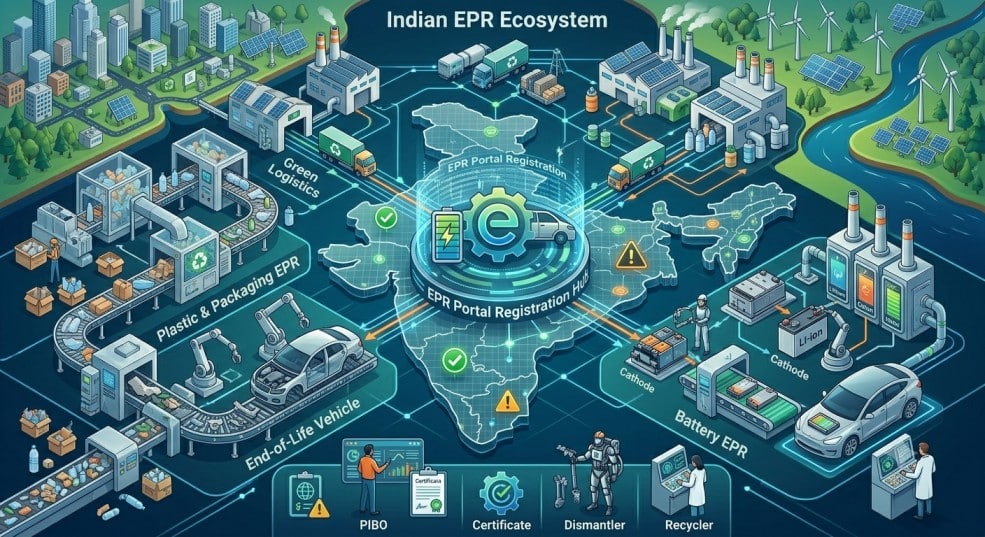
The registration of an End-of-Life Vehicle (ELV) is not just a formality but a duty of automobile companies to ensure the recycling and disposal of the vehicles. To ensure the effectiveness of this process, the system oversees three key components: Extended Producer Responsibility (EPR) certificates, data declarations, and vehicle registrations.
Ensuring EPR is a crucial measure mainly because of the presence of toxic materials such as steel, rubber, glass, etc. Failure to dispose of these materials can have adverse environmental effects. As a result, ELV registration and compliance are not merely about disposal but a mandatory regulation, which is why the government has made it compulsory.
Why does ELV registration matter?
ELV registration is very important because it makes sure that old or used cars are disposed of in an eco-friendly manner and in a legal way. With the increase in automobiles on roads, managing the waste has become a major environmental concern.
End-of-Life Vehicle(ELV) registration through EPR (Extended Producer Responsibility) portals helps the government, companies, recyclers, and vehicle owners in creating a well-structured system for the management of waste and recycling of vehicles.
The reason for the End-of-Life Vehicle(EVL) is to protect the environment. Older cars contain toxic materials.
Why does this matter to manufacturers and vehicle owners?
· These hazardous substances, if not handled correctly, can pollute the environment.
· The registered scrapping and recycling systems safely remove these hazardous materials, thereby reducing pollution and safeguarding public health.
· EVL registration also advocates proper recycling.
· Vehicles contain valuable materials such as rubber, plastic, glass, etc., that are reusable in industries.
· Recycling these materials reduces the demand for new raw materials and lowers energy consumption.
The Portal-Based Registration System
Another main reason is legal issues. As per India’s environmental regulations and EPR for ELV rules, manufacturers, recyclers, and bulk vehicle owners are required to comply with EPR rules.
Registration on the EPR portal helps manufacturers to operate legally and avoid any sort of penalty. It creates transparency in the entire recycling chain. EVL registration is equally important for road safety and pollution control. Older automobiles often emit excessive pollution and may not meet current standards.
Removing such vehicles helps reduce air pollution and improve the overall environment. This aligns with efforts to control vehicle pollution emissions and promote green transportation systems. For automobile manufacturers, EVL registration helps fulfill Extended Producer Responsibility (EPR) requirements.
Producers are expected to ensure that vehicles sold in the market are eventually recycled or disposed of responsibly.
Why EVL Registration Matters for Automobiles?
1. The EPR portal allows them to track recycling activities, purchase EPR certificates, and demonstrate compliance with government-mandated environmental laws.
2. The registration system helps prevent illegal disposal operations.
3. In the absence of allowed registration and monitoring, many vehicles are dismantled in informal sectors without safety measures or pollution control.
4. This not only harms the environment but also results in unsafe working practices.
5. The EVL registration promotes vehicle scrapping facilities that follow government-approved recycling and disposal standards. Digitized EVL registration portals improve efficiency and accountability.
6. Through online systems managed by regulatory authorities, such as the Central Pollution Control Board (CPCB), stakeholders can maintain records, submit returns, generate certificates, and track compliance in real time.
7. This reduces paperwork and creates a transparent monitoring system for both authorities and businesses.
To Sum Up
To conclude, End-of-Life Vehicles (ELV) registration matters because it blends environmental protection, legal compliance, recycling efficiency, pollution control, and sustainable resource management into a single framework. The EPR portal makes the registration process much easier. It ensures the responsible handling of End-of-Life Vehicles (ELVs), enables sustainability, and promotes a cleaner and safer automotive environment for the future.