
Deadlines were supposed to mean compliance. Instead, they became a bottleneck.
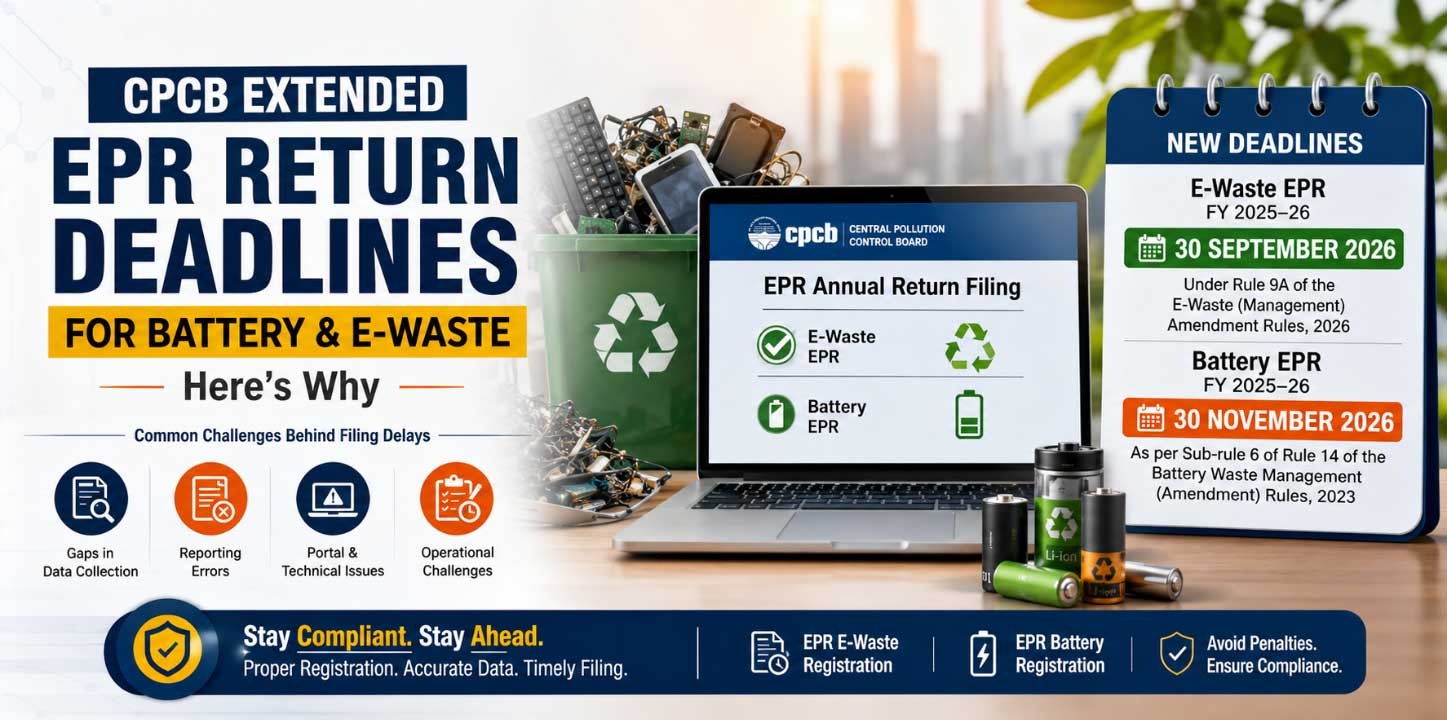
On 27th August 2026, CPCB published two notices extending the deadlines for the Annual Return for Battery and E-waste EPR.
The extension of these deadlines has revealed a reality that many businesses have been dealing with for some time.
What is making EPR compliance difficult for businesses?
Let’s look at the common challenges businesses face during EPR E-waste Registration and EPR battery registration. And the gaps often show up during annual return filings.
What Changed?
On 27 August 2026 CPCB released two public notices which clearly mentioned that the deadline for:
- E-waste EPR for FY 2025–26 annual filing deadline extended to 30 September 2026 under Rule 9A of the E-Waste (Management) Amendment Rules, 2026
- Battery EPR for FY 2025–26 annual return deadline extended to 30 November 2026 as per sub-rule 6 of Rule 14 of the Battery Waste Management (Amendment) Rules, 2023.
The EPR regulatory landscape keeps evolving, and annual return filing is where businesses are expected to demonstrate transparency in compliance in the waste management cycle.
Why Did the Deadlines Need Extension?
CPCB’s notice highlighted these as “operational and technical challenges” that hindered many businesses in the timely submission of compliance-related data.
To ensure compliance, the government and authorities expect all businesses to monitor, document, and report to the authorised bodies.
So, what are the operational reasons that cause businesses to miss or make mistakes in their Annual Return filings?
Gaps in Data Collection
When the Annual Return is filed, data is usually taken from internal business records and portal transaction histories.
Many businesses are currently struggling to keep track of their internal records like GST invoices, purchase bills and operational data.
These struggles often create gaps in audit records, where businesses’ compliance fails.
Reporting Errors
One of the obvious consequences of Gaps in data collection is reporting errors.
When companies file for E-waste EPR or Battery Waste EPR, gaps in data result in incorrect information in the report.
A mismatch between reported and actual data will be considered non-compliance. This triggers a series of investigations, which is damaging to the brand image, in addition to increased costs.
Portal/technical challenges
The portal rejects many annual returns due to registration issues. It happens if your business details are incorrect, there is a mistake in GST details, or there are errors in category selection.
Errors carried over from registration often resurface as rejections when it’s time to file the annual return. This might hamper future annual return filings.
These are some of the most common compliance gaps businesses face. Have you encountered another EPR challenge? Let ARKCA Corporate help you solve it. We help businesses manage EPR E-waste Registration and EPR Battery Registration so you never miss your compliance obligations.