The Plastic Waste Management (Amendment) Rules, 2026, introduced requirements that PIBOs need to understand and prepare for.
Today, recycling is not a choice but a necessity for brand credibility and compliance in India.
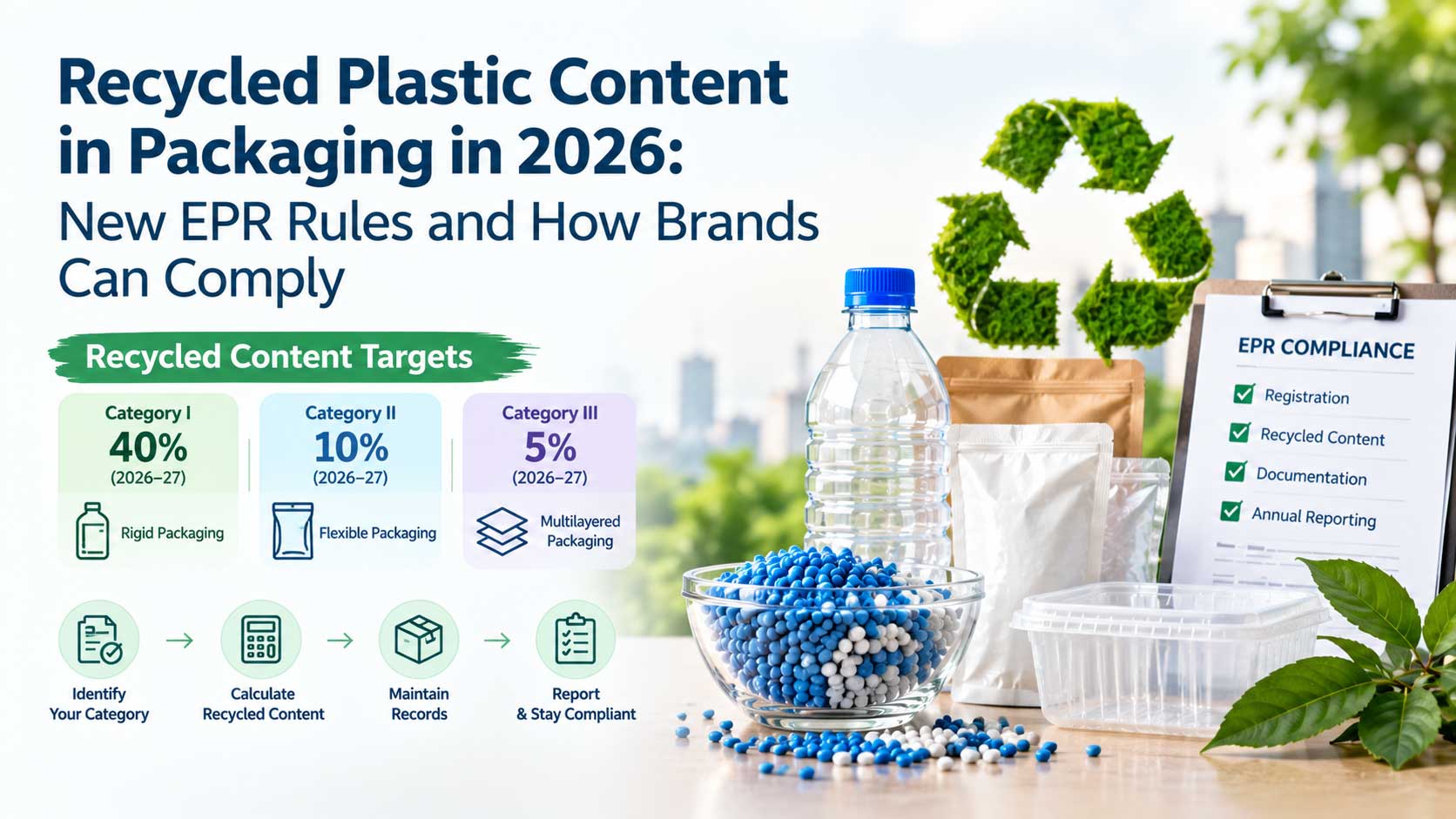
The 2026 amendments introduce mandatory recycled-content targets for Categories I–III and expand reuse obligations for rigid packaging.
For brands, this means procurement, supplier documentation and EPR reporting must work together to meet targets, ensuring compliance.
How to Calculate the Latest Target
The 2026 Plastic Waste Management amendments bring recycled-content requirements into sharper focus, making it essential for businesses to understand their obligations under EPR for Plastic Waste.
To comply, Producers, Importers and Brand Owners (PIBOs) must first identify their plastic packaging category and determine the applicable recycled-content target for the relevant financial year.
But how do you calculate the recycled plastic content in your packaging?
Use this simple formula:
Recycled Content (%) = (Weight of Recycled Plastic Used ÷ Total Plastic Packaging Weight) × 100
For example, if 200 kg of plastic packaging contains 40 kg of recycled plastic, the recycled content is 20%.
Businesses must ensure that their calculations follow the applicable regulatory methodology and that their recycled-content claims are supported by proper documentation.
Three Steps to Stay Compliant
If you are clear on the targets, then this is your guide to staying EPR compliant in 2026
1. Make the packaging traceable
The new rules emphasise traceability and recycled-content verification. Maintain clear records and use QR codes or barcodes wherever required to help regulators track packaging materials.
2. Keep your records organised
The EPR for Plastic Registration now has stricter verification standards.
So, maintain purchase invoices, supplier declarations, packaging weights and recycled-content calculations in one place.
This makes it easier to verify your claims and provide supporting documents during an audit.
3. Align Procurement with EPR Reporting to Local Bodies
Coordinate with your procurement and compliance teams to track recycled plastic purchases and usage.
Maintain accurate records of packaging materials and ensure your procurement data supports the information submitted to the relevant regulatory authorities for EPR compliance.
Simplify EPR for Plastic Waste with ARKCA Corporate
Meeting recycled-content targets requires more than sourcing recycled plastic. Businesses also need accurate documentation, reliable tracking and the right compliance approach.
ARKCA Corporate assists businesses with EPR for Plastic Waste, including registration, documentation and compliance support.
Looking for EPR Plastic Registration Online? Connect with ARKCA Corporate to assess your requirements and take the next step towards plastic packaging compliance.