The automotive sector is moving towards greener and more sustainable solutions. The Extended Producer Responsibility (EPR) and End-of-Life Vehicle (ELV) make the scrapping of vehicles compulsory. The digital certification systems of the government make it much easier.
The EPR Certificate can be issued from online portals. The Registered Vehicle Scrapping Facilities (RVSFs) maintain compliance through CPCB portals. The vehicle manufacturers must follow proper disposal and recycling procedures according to ELV rules.
What is an ELV Certificate?
Some certificates are critical in the disposal process for older vehicles.
An ELV certificate ensures an automobile is properly recycled through an RVSF. The RVSF issues recycling compliance certificates, certificates of destruction (CoD), certificates of deposit (CoD), EPR certificates, and recycling compliance certificates.
These certificates help manufacturers meet their EPR obligations. They help prove the legal disposal of automotive vehicles, which would make scrapping much easier.
Why are these certificates essential for vehicles?
The government decreed and ordered vehicle scrapping to ensure that the environment is kept safe. The EPR and ELV are made important as they help in:
- Reducing pollution from scrapped vehicles. The materials used in the vehicles are not biodegradable, and hence it becomes imperative to safely dispose of these toxic materials.
- These certificates ensure the safe disposal of scrap waste.
- Improving environmental sustainability supports India’s economic goals.
The government had also mandated vehicle scrapping and recycling.
Targets and Limitations of EPR and ELV
The EPR targets are calculated every financial year, and they depend on the volume of steel a vehicle contains. The vehicle makes up the volume of steel in the vehicles, calculated based on sales in previous years.
For producers, it is very important to identify whether the vehicle is transportable or non-transportable. Passenger vehicles make up approximately 75% steel and 8% aluminium. The higher the steel content.
The higher the recycling targets for manufacturers, EPR and ELV obligations from the year sales began.
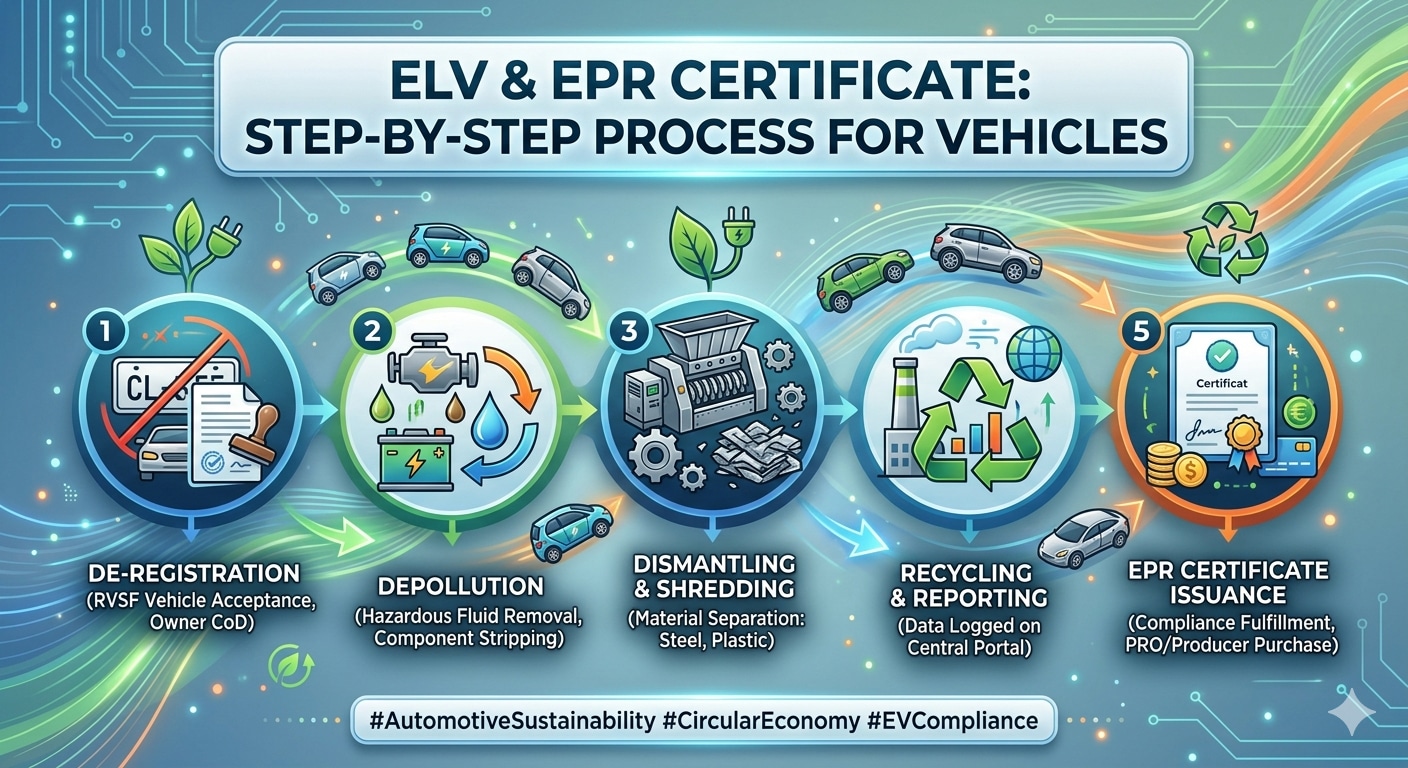
Step-By-Step Process to Get the EPR Certificate
To achieve compliance and get EPR certificates for importers and vehicle manufacturers the owners have to rely on digital portals. There are certain steps to be followed by manufacturers and vehicles owners and some of them may include:
- The registration on CPCB EPR portal using the GST, PAN, and the details of an authorized person.
- Any producer, RVSF, or bulk consumer that fails to comply with handling and scrapping obligations is liable to pay Environmental Compensation equivalent to the environmental damage caused, as assessed under CPCB guidelines.
- The rules also allow partial refund of EC if the outstanding obligations are subsequently fulfilled — creating an incentive for delayed but eventual compliance.
Manufacturers that have an EPR certificate could avoid legal penalties and increase sustainability.
To Sum Up
In a nutshell, the EPR and ELV certification process for vehicles plays a crucial role in ensuring compliance with government environmental regulations. The EPR Certificate enables businesses to remain legally compliant and contribute to pollution reduction. As environmental regulations become mandatory every day, obtaining EPR certification is no longer an option but a legal requirement. With the increase in sustainability goals, EPR and ELV compliance would become compulsory for the automobile industry.