A global trend clearly shows that at least 5-10 billion phones and batteries remain sitting in desk drawers in every home.
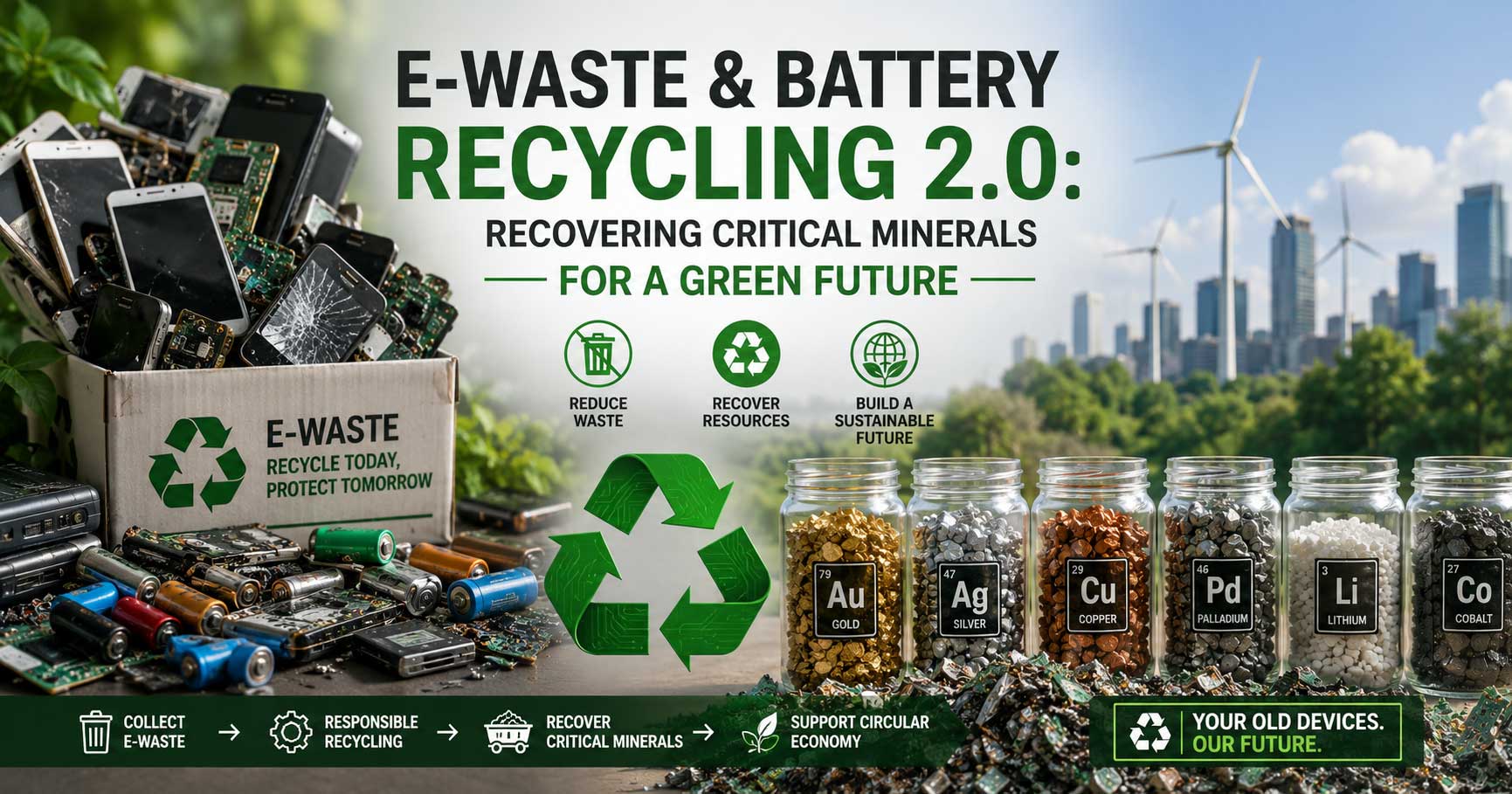
The problem? Precious raw materials — palladium, copper, lithium, cobalt and rare earth elements remain unused, forcing producers to rely on continued mining activities.
Then what’s the solution? Recycling the same electronics will not only help the environment but also help businesses recover critical resources.
What drives the e-waste battery recycling trend for resource recovery? Let’s Learn
Your Batteries & Electronics Waste Are Not Regular Trash: Dispose Wisely
Disposing of electronic waste improperly might have environmental risks:
- Loss of rare raw materials
- Release of toxins in ecosystems
- Increased greenhouse gas (GHG) levels in the atmosphere
Before throwing that old appliance away, we must learn how to dispose of electronic waste safely to reduce such risks in the future.
From Waste to Resource: The Rise of Urban Mining
Given the amount of technology we use in our day-to-day lives, e-waste has emerged as a rising global waste problem.
To tackle the problem, Urban Mining has emerged as a solution for resource recycling and reducing environmental impact.
Urban Mining refers to the extraction and purification of precious materials that are discarded as waste. It is one of the pathways for easier adoption of the circular economy.
One of the successful cases of urban mining has been demonstrated by a UK company, DEScycle, for the recovery of gold, silver, copper, and palladium from disposed mobiles and laptops, transforming “domestic waste streams into sovereign supply”, as per the founder, Fred White.
Domestic recycling through Urban Mining also cuts import dependency and reduces costs.
Want to be a part of this change? Drop your old batteries and devices at the certified e-waste centres now!