Getting a product ready for the market is more than just manufacturing it.
You also need to make sure it meets the required safety, quality, and performance standards before it reaches consumers.
But who sets and oversees these standards in India?
It is the Bureau of Indian Standards (BIS).
For manufacturers, understanding what BIS does and why its certification matters is an important step before bringing a product to the Indian market.
Who are they?
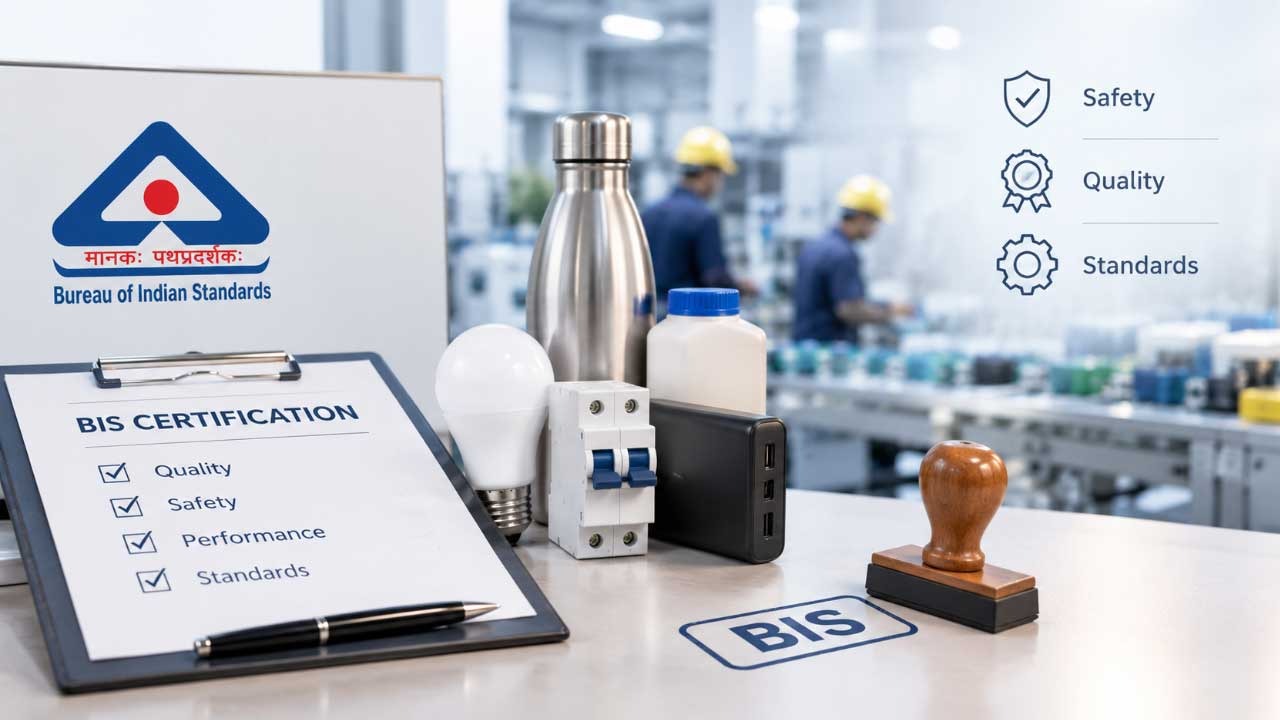
The Bureau of Indian Standards (BIS) is India’s national standards body responsible for developing and maintaining standards that help ensure the quality, safety, and reliability of products.
BIS is responsible for overseeing every stage of the production process to meet the standards before they reach the market.
Does Your Product Need BIS Certification?
To understand whether your products require BIS certification or not, always collect basic information on
- The Product Type
- Their specifications and
- Their Intended use
A detailed product description can help you understand your compliance requirements better.
Knowing that BIS applies is only the first step. The next question is: what does compliance actually involve?
What is the process behind BIS certification?
Here’s the step-by-step guide to complete your certification process.
Step 1: Identify the product standard
Every product manufactured in India has a specific Indian Standard (ISC) code of identification. Manufacturers are advised to identify them before beginning the BIS registration process.
Step 2: Product Testing
After the identification of the IS code of the product, the manufacturer has to meet the inspection guidelines. This is important for manufacturers to have:
- Approved manufacturing infrastructure
- Facilities for quality testing
- Trained expertise in production
Step 3: Documentation
All the documentation must be cleared and produced as and when required. The documents may include:
- Reports
- Product details
- Supplier details
- Machinery and equipment licences and so on.
Step 4: Factory Assessment/Inspection (where applicable)
Once the documents are submitted, BIS will verify all reports against supporting information.
BIS may carry out this assessment by directly visiting the facility and testing the products themselves.
Step 5: Certification
Once the assessment is cleared, BIS issues the certificate. This certification will allow the manufacturer to meet the market requirements and gain credibility while selling the product.
How does ARKCA Corporate help here?
BIS certification can involve multiple steps, from identifying the applicable Indian Standard to preparing documents and coordinating testing and inspection requirements.
ARKCA Corporate helps manufacturers navigate this process with structured compliance support.
We assist in understanding applicable BIS requirements, preparing and organising the required documentation, coordinating with relevant testing facilities, and supporting the application process.
Our team also helps ensure that compliance requirements are addressed accurately at each stage, reducing avoidable delays and documentation gaps.
With the right guidance, manufacturers can focus on their products while we help simplify the BIS certification journey from application to compliance.
Launch with confidence. Let ARKCA Corporate handle the compliance journey.