
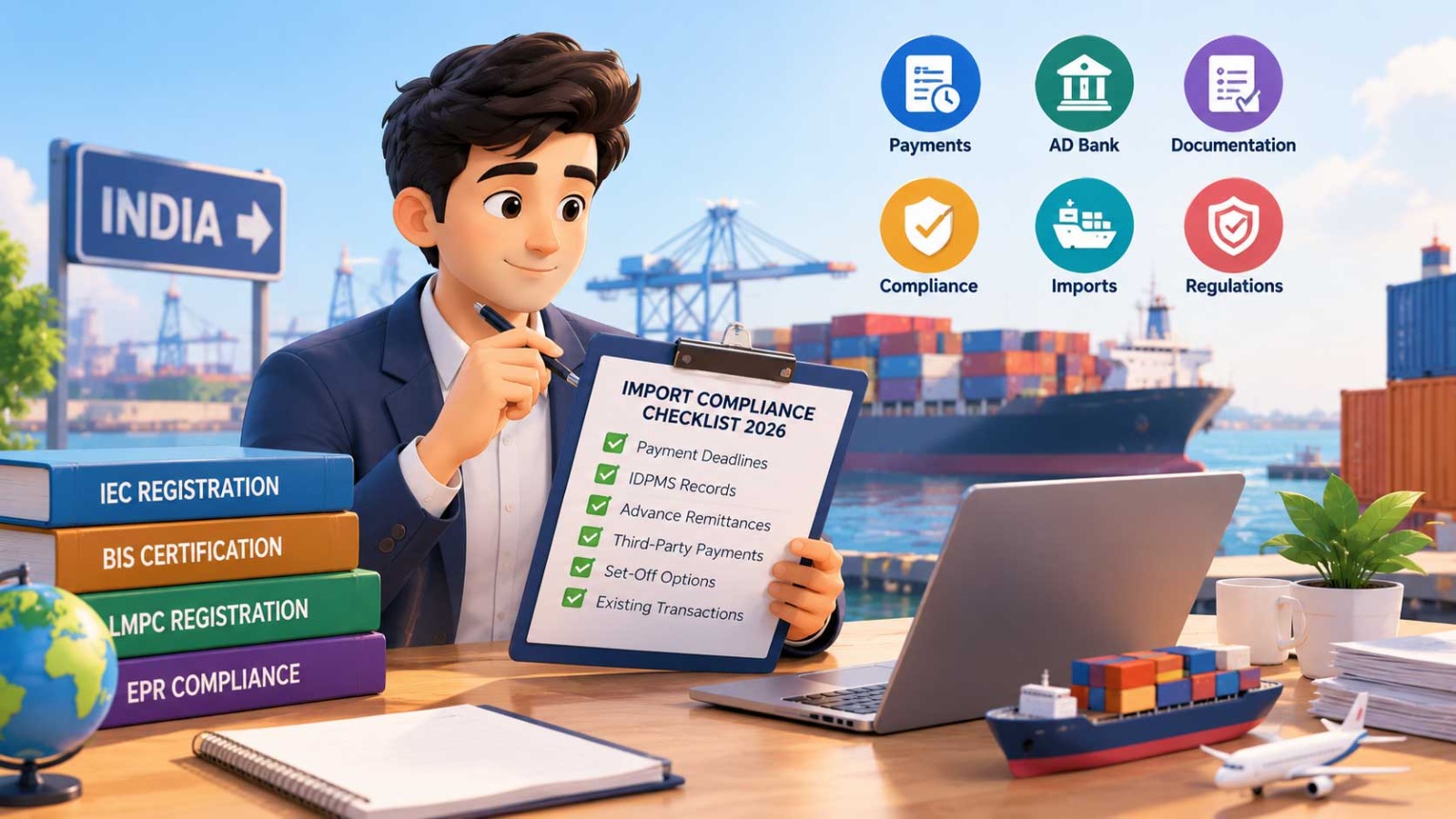
Starting an import business in India? Check your compliance before your shipment takes off.
Importing into India is becoming more than a customs clearance exercise. With the RBI’s new FEMA Export-Import Regulations, 2026, effective from 1 October 2026, importers must pay closer attention to transaction monitoring, payment timelines, and coordination with their Authorised Dealer (AD) banks.
For businesses importing goods into India, understanding these changes is essential to keeping payments, documentation and outstanding transactions in order.
What Has Changed for Importers in 2026?
A missed payment deadline, an unreconciled import entry, or incomplete paperwork can create unnecessary compliance hurdles.
The revised regulatory framework makes it important for importers to review their payment arrangements, banking processes, and transaction records. Addressing these gaps early can help prevent avoidable complications later.
Here are six areas every importer should review.
6 Import Compliance Checks to Make Before Your Next Shipment
1. Verify Your Import Payment Deadlines
Check whether payments to overseas suppliers are being made within the period specified in the underlying contract. If you need an extension, coordinate with your AD bank and review the applicable requirements.
2. Keep Your IDPMS Records Reconciled
Ensure your Bills of Entry, supplier invoices and bank payment records match.
For eligible import transactions of up to ₹10 lakh per Bill of Entry or service invoice, declaration-based closure under IDPMS is permitted, subject to applicable conditions.
3. Review Advance Remittances
If you make payments before receiving goods or services, review your advance payment arrangements with your AD bank. Maintain the necessary supporting documents and track outstanding transactions.
4. Document Third-Party Payments
When a third party makes a payment on your behalf, verify that the arrangement satisfies the applicable regulatory conditions. Keep the commercial purpose and supporting documentation clear.
5. Assess Your Set-Off Options
If your business has both export receivables and import payables, check whether you qualify for permitted set-off arrangements through your AD bank.
6. Revisit Your Existing Import Transactions
Classify transactions completed before 1 October 2026 separately from outstanding and newly initiated transactions. Consult your AD bank to understand which regulatory provisions apply to each.
Import Compliance Support for Your Business
Importing into India involves more than arranging suppliers and managing shipments. The right registrations, certifications, and documentation can be equally important.
ARKCA Corporate helps importers navigate applicable Indian regulatory requirements, from IEC registration and BIS certification to LMPC registration and EPR compliance.
Our team assists with:
- Regulatory applicability assessment: Identify the registrations and approvals relevant to your products and business.
- Documentation support: Organise the paperwork required for applicable compliance processes.
- Application and filing assistance: Navigate relevant registrations and certification procedures.
- Regulatory coordination: Get support through the applicable compliance process.
Requirements vary depending on the product, business activity, and applicable regulations.
Get Your Import Compliance in Order
A shipment-ready business starts with compliance-ready operations.
Whether you are entering the Indian market or expanding your import portfolio, ARKCA Corporate can help you understand your applicable compliance requirements and prepare for your next shipment.
Check your import compliance requirements with ARKCA Corporate today.