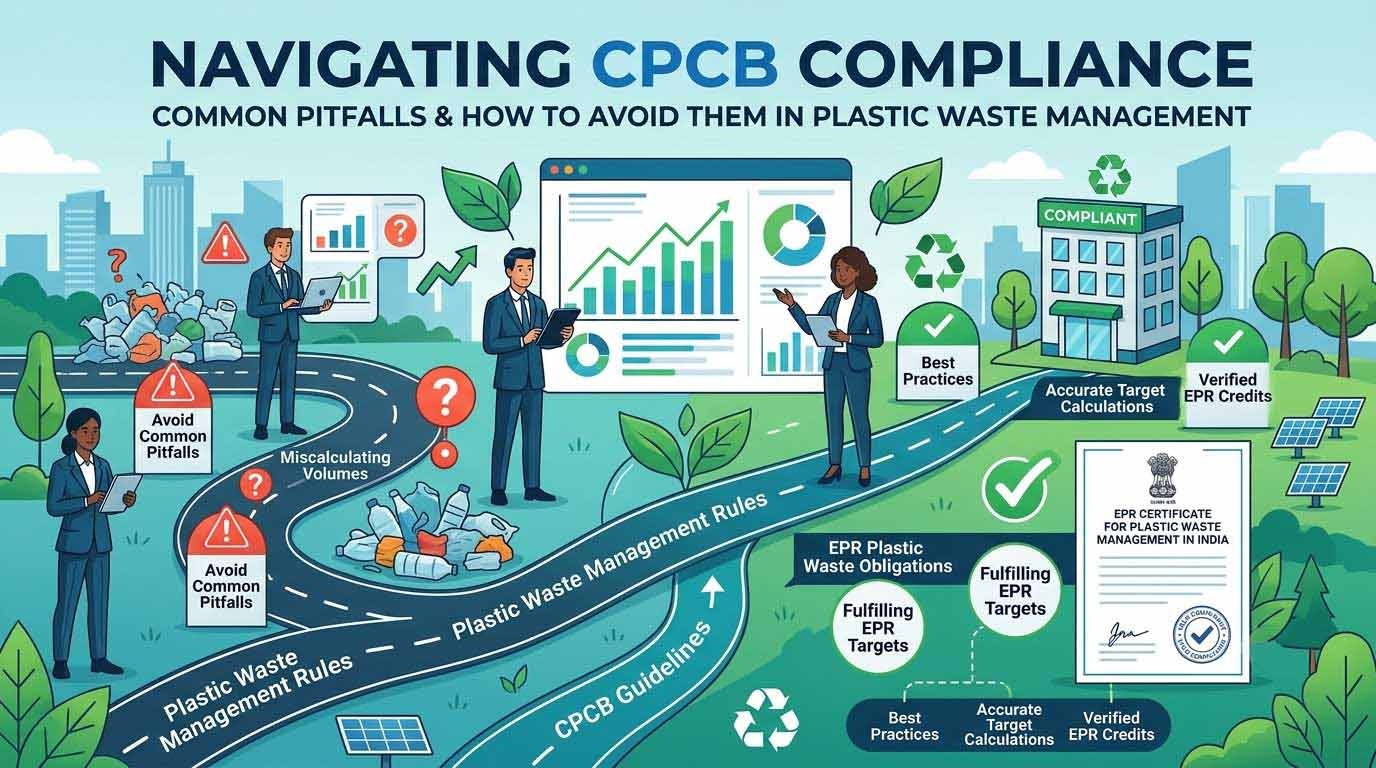
The regulatory landscape around plastic waste management in India has shifted dramatically in recent years. Under the Central Pollution Control Board (CPCB) directives and the Plastic Waste Management (PWM) Rules, Extended Producer Responsibility (EPR) is no longer a voluntary CSR initiatives – it is a strict, legally binding mandate.
Whether you are a Producer, Importer, or Brand Owner (PIBO), maintaining compliance requires meticulous tracking, accurate reporting, and timely filings. However, navigating the CPCB portal and fulfilling your annual targets can be complex. Many businesses fall into avoidable traps that lead to rejected filings, operational delays, and heavy financial penalties.
In this guide, we break down the most common pitfalls companies face when managing their obligations for EPR Plastic Waste and share actionable strategies to keep your business compliant.
1. Common Compliance Mistakes Made by Businesses
Failing to meet CPCB compliance rarely happens intentionally; most issues arise from administrative oversights, misunderstanding category classifications, or poor record-keeping.
A. Miscalculating Plastic Packaging Volumes
Calculating your EPR target isn’t as simple as totaling the weight of products sold. The CPCB categorizes plastic packaging into four distinct categories:
- Category I: Rigid plastic packaging
- Category II: Flexible plastic packaging (single layer or multilayer, packaging made of plastic sheets, etc.)
- Category III: Multilayered plastic packaging (at least one layer of plastic and at least one layer of material other than plastic)
- Category IV: Plastic sheet or like used for packaging as well as carry bags made of compostable plastics
A frequent mistake businesses make is misclassifying their packaging types or failing to track post-consumer vs. pre-consumer waste correctly. An error in base-year volume reporting can compound over time, leading to inaccurate recycling obligations and flagged filings during CPCB audits.
B. Missing Annual & Quarterly Return Deadlines
Securing an initial registration on the CPCB centralized portal is only the first step. PIBOs must submit regular returns detailing their procurement, sales, and fulfilled recycling credits.
- Delaying filings or missing deadline windows can lock your portal access.
- Discrepancies between declared sales volumes and tax/GST records can trigger automatic system alerts and audits.
2. The High Cost of Non-Compliance: Environmental Compensation (EC) Penalties
To ensure strict adherence, regulatory authorities have implemented the “Polluter Pays” principle. The CPCB and State Pollution Control Boards (SPCBs) actively enforce severe Environmental Compensation (EC) fines for non-compliance.
Key Risks of Regulatory Non-Compliance:
- Financial Penalties: EC charges are levied on a per-tonne basis for unfulfilled targets or delayed reporting. Crucially, paying an Environmental Compensation fee does not exempt a business from fulfilling its recycling targets—the pending target is carried forward to subsequent years alongside the fine.
- Cancellation of Registration: Repeated non-compliance or submission of incorrect documentation can result in the suspension or cancellation of your registration, effectively halting your operations and sales in the Indian market.
- Supply Chain & Operational Friction: Major retailers and e-commerce platforms now mandate proof of compliance before onboarding suppliers. Without a valid certificate, your distribution capabilities could be severely disrupted.
Environmental Compensation is not a substitute for compliance. Paying fines does not erase your unfulfilled recycling obligations; it simply adds an unnecessary financial burden on top of them.
3. How to Avoid Pitfalls: Verifying Recycling Credits and Waste Processors
To fulfill your EPR Plastic Waste obligations, you must purchase EPR credits from CPCB-registered Plastic Waste Processors (PWPs)—such as recyclers, co-processors, or waste-to-energy plants. However, the market for credits carries its own risks if not properly navigated.
Practical Tips to Safeguard Your Compliance:
- Audit Your Plastic Footprint Early: Conduct an annual internal audit of all packaging material imported, manufactured, or distributed. Ensure data aligns perfectly with your financial and GST declarations before submitting portal forms.
- Verify PWP Registrations: Never procure certificates from unregistered or unverified third-party aggregators. Ensure that the Plastic Waste Processor issuing the certificate holds an active CPCB/SPCB registration for the specific category of plastic you require.
- Check Credit Generation Limits: PWPs have capped capacity limits declared on the CPCB portal. Ensure the processor has sufficient legitimate processing capacity to issue valid credits to avoid purchasing duplicate or invalid certificates.
- Maintain End-to-End Documentation: Keep detailed records of purchase orders, invoices, credit transfer certificates, and portal transfer acknowledgments for a minimum of 3 to 5 years for audit readiness.
Streamline Your EPR Plastic Waste Compliance
Navigating shifting regulatory frameworks, accurate target calculations, and portal verification requires continuous vigilance. A single error in data entry or credit verification can result in compliance flags and hefty financial penalties.
Avoid costly compliance errors and environmental compensation fees by partnering with experts who handle your documentation, target calculations, and EPR Plastic Waste obligations from start to finish. Check out our EPR Plastic Waste consulting support.
By taking a proactive approach to managing your EPR certificate for plastic waste management in India, your business can mitigate regulatory risks, protect its brand reputation, and contribute meaningfully to a circular economy.
Would you like to draft a complementary social media post (e.g., for LinkedIn) or an email newsletter excerpt to promote this blog post?