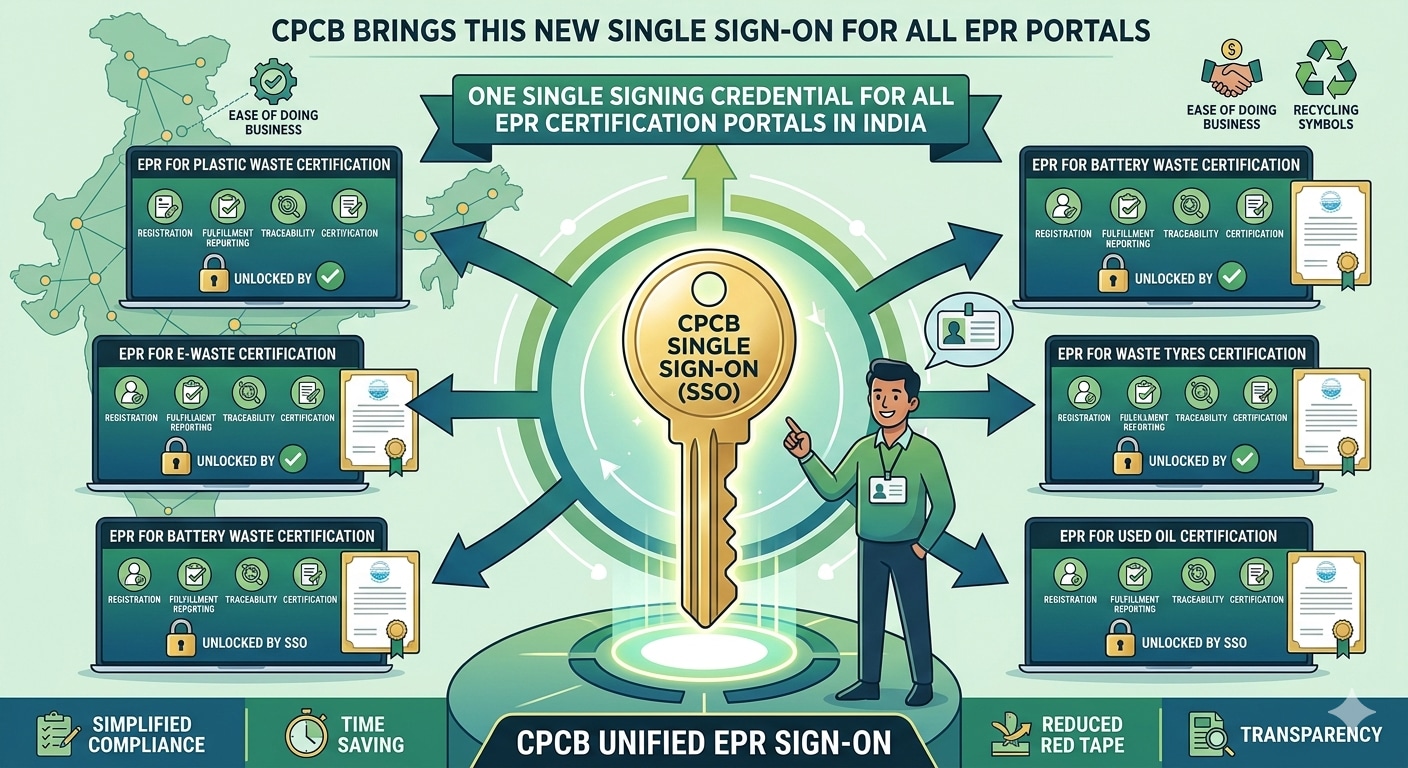
Single Sign-On (SSO) is an advanced authentication system that allows users to access multiple applications and digital services using just one set of login credentials. In the context of EPR (Extended Producer Responsibility) portals, SSO plays a very important role in simplifying how manufacturers, importers, recyclers, and compliance officers access and manage regulatory systems.
EPR compliance is not limited to a single activity. It includes multiple processes such as registration of entities, submission of recycling data, tracking waste collection targets, uploading documents, and generating compliance reports.
In most traditional systems, each of these functions may exist on separate modules or portals, requiring different login credentials. This often creates confusion, increases administrative burden, and slows down overall operations. SSO removes this complexity by creating a unified access system. Once a user logs in through SSO, they are automatically authenticated across all integrated EPR portals and services. This means users can seamlessly move between different compliance modules without the need to repeatedly enter usernames and passwords.
For organizations handling large volumes of compliance data, this significantly improves workflow efficiency and reduces time wasted on multiple login attempts.In the EPR ecosystem, regulatory authorities such as the Central Pollution Control Board (CPCB) rely on digital platforms to ensure proper monitoring and enforcement of environmental responsibilities. SSO helps strengthen these platforms by ensuring that all stakeholders operate within a secure, centralized system.
Whether it is filing annual returns, checking compliance status, or updating recycling data, users experience a smoother and more connected digital journey. One of the most important advantages of SSO is improved security management. Instead of storing and managing multiple passwords across different systems, users rely on a single secure authentication process. This reduces the risk of weak passwords, repeated password usage, and unauthorized access attempts. It also allows system administrators to implement stronger security measures such as multi-factor authentication and centralized access control, ensuring better protection of sensitive compliance data. SSO also plays a key role in reducing technical errors and login failures.
In systems where users frequently switch between portals, multiple login sessions can often lead to system conflicts or session timeouts. With SSO, authentication becomes streamlined, reducing these issues and providing a more stable and reliable platform experience. From an operational perspective, SSO improves productivity by saving time and reducing friction in daily compliance tasks. Users do not need to remember multiple credentials or go through repeated verification steps. This is especially beneficial for organizations managing large-scale EPR obligations across different regions or product categories. Overall, SSO brings together security, efficiency, and ease of access into one unified system, making EPR compliance more manageable and user-friendly.
Conclusion
Single Sign-On (SSO) has become a vital component of modern EPR portal systems because it transforms how users access and interact with compliance platforms. Instead of dealing with multiple logins, repeated authentication steps, and fragmented systems, users can now operate through a single secure gateway that connects all EPR services together.This unified approach not only simplifies access but also strengthens the overall security framework by reducing password-related risks and enabling centralized control over user activity.
At the same time, it enhances efficiency by allowing smoother navigation between different compliance modules without interruptions or delays. As EPR systems continue to expand and more stakeholders become part of the digital compliance network, the importance of SSO will only increase. It ensures that the system remains scalable, secure, and easy to use, while supporting transparent and accountable environmental management practices.In essence, SSO is not just a technical feature—it is a foundational improvement that makes EPR portals more connected, reliable, and future-ready.